Start With The Load, Not The Trailer Shape
The easiest mistake is to shop by looks instead of use. Before you compare trailer types, write down what you need to move, how often you will load it, and whether the trailer will live in Kempton Park, drive long distances to Durban, or spend time near the coast where salt air can bite into fittings. A trailer that suits weekend errands may be poor for daily work, and a light-duty unit may not cope with building rubble, garden waste or moving stock across town.
Use this quick check before you compare listings:
- What will you carry most often: tools, furniture, garden refuse, bikes, machines or stock?
- How heavy is the load when full, not only when empty?
- Will you load by hand, by ramp, or with a forklift?
- Do you need a tarpaulin, cage, drop-side or enclosed body?
- Will it tow mainly in town, on the N1/N3, or on mixed roads with potholes and gravel?
We help private sellers and dealers show the real condition clearly, because the right trailer must match the work you actually plan to do.
Open Flatbed Trailers For General Use
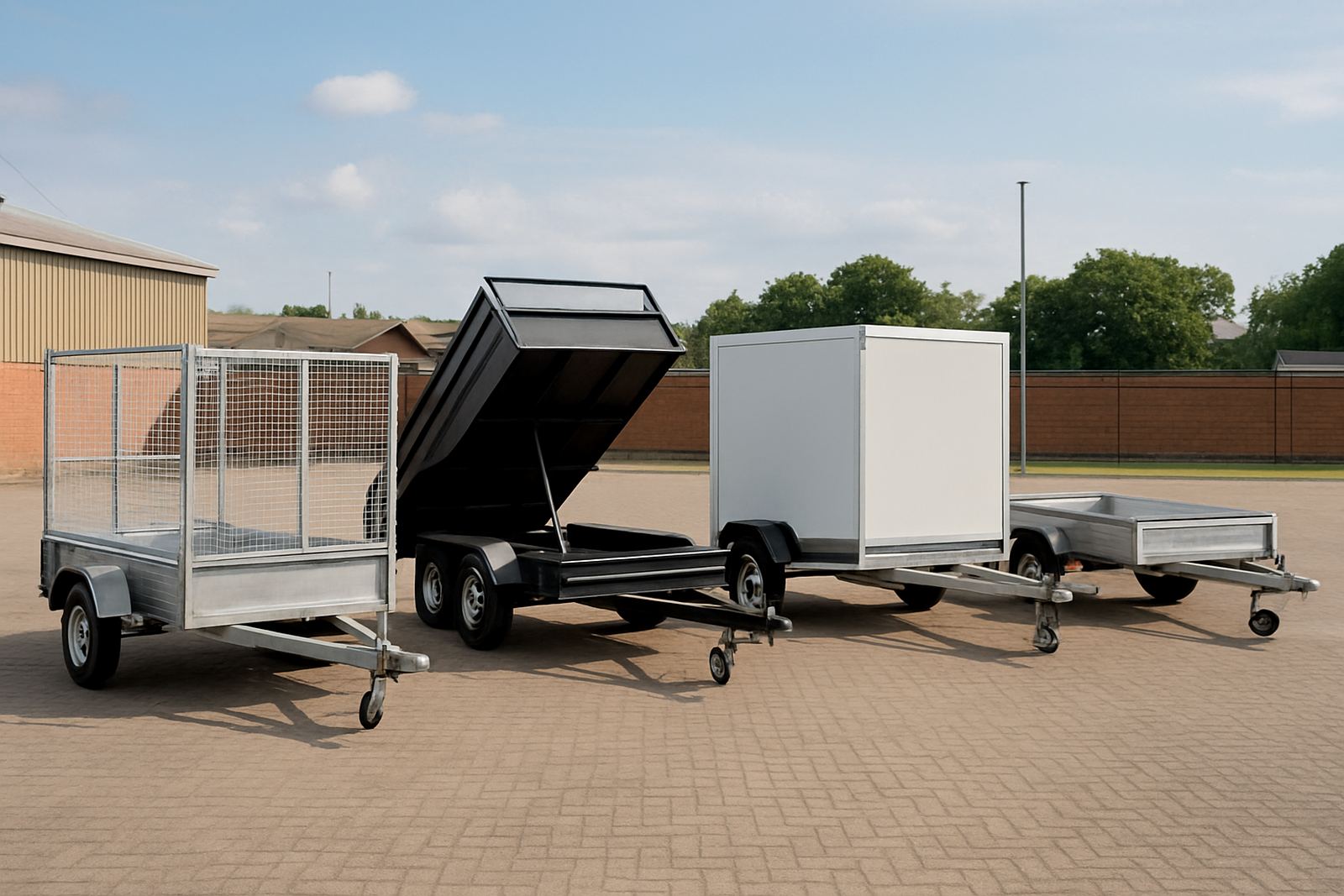
Flatbed trailers are the most common all-round choice. They suit household moves, hardware runs, pallets, small machines and light business deliveries. With no sides to work around, loading is simple and you can strap down awkward cargo with fewer problems. For buyers who need flexibility, this is often the first category worth comparing.
They are usually easier to inspect as well. You can see the floor, chassis, suspension points and tie-downs without removing panels. That makes it simpler to spot bent members, rust or repairs that were done quickly rather than properly.
- Best for: general hauling, mixed loads, builders, small traders and homeowners
- Watch for: floor damage, cracked welds, uneven tyre wear and loose couplings
- Good to ask: is the load space long enough for your longest item?
If you tow in busy Gauteng traffic, check the braking setup and the condition of the lights. Night-time faults are common after power-cut-related workshop delays, so a proper test is worth the time.
Enclosed Trailers For Security And Weather Protection
Enclosed trailers are the safer choice when cargo must stay dry, hidden or clean. They work well for event gear, tools, stock, catering equipment and personal items that should not be exposed to rain or dust. In Durban and other humid areas, this can also help protect contents from moisture, but only if the body seals properly and the floor is sound.
Compare enclosed units by door access, internal height and airflow. A trailer that is too low can make loading painful, while poor ventilation can leave a smell inside after a few wet trips. Check that hinges open smoothly and that locks still close correctly.
- Best for: secure transport, weather-sensitive goods, mobile work and mixed business use
- Watch for: water leaks, roof dents, rotten timber floors and damaged seals
- Good to ask: can you stand upright inside, or at least load safely without crouching too much?
For buyers in Johannesburg or Pretoria, enclosed trailers are often preferred for tool theft prevention. For longer-distance collection, ask for clear photos of the roof, floor, corners and rear door area before you travel.
Cattle, Bike And Utility Trailers For Special Jobs
Some trailer types are built for a specific task and do that one job better than a general-purpose unit. Cattle trailers focus on ventilation, strength and safe loading for livestock. Bike trailers, whether open or enclosed, need secure anchoring and a layout that keeps motorcycles stable in transit. Utility trailers are used for smaller work loads, gardening gear and service runs where easy access matters more than looks.
When comparing these, look beyond the body and check the details that affect daily use. A livestock trailer should have proper partitions and a ramp that latches securely. A bike trailer should have wheel chocks or tie-down points in the right spots. A utility trailer should have enough payload for the work and not just enough space.
- Best for: livestock, motorcycles, field work, maintenance teams and event crews
- Watch for: bent ramps, weak latches, worn flooring and missing anchor points
- Good to ask: does the trailer still suit the exact load shape you transport?
If the trailer will be used across provinces, inspect the suspension carefully. What feels fine on short local trips can become a headache on rougher roads between Bloemfontein, Polokwane and the East Rand.
How To Compare Size, Weight And Tow Vehicle Match
Carrying space is only one part of the decision. A bigger trailer can carry more volume, but the tow vehicle must still handle the weight, the braking and the drawbar load. That matters whether you drive a bakkie, SUV or light commercial vehicle. Compare the trailer against the tow vehicle’s limits, then leave a margin for safety and road conditions.
Before you commit, work through this checklist:
- Confirm the empty weight and estimated loaded weight
- Check the tow rating on the vehicle and the coupling type
- Inspect tyres for age cracks, not only tread
- Test the lights, indicators and brake lights
- Look at the spare wheel and whether it is usable
A well-matched setup should track straight, brake evenly and not feel nervous at speed. If the trailer sways or sits nose-up, the combination may be wrong or the load may be packed badly. That is something we flag during pre-sale inspections, especially for buyers arranging delivery from our Spartan base to other centres.
Inspection Checklist Before You Buy
Condition is where the real value is won or lost. A trailer can look tidy in photos but still need work on the chassis, wiring or running gear. Compare similar listings by asking the same questions each time, then use a simple inspection routine so you can judge one trailer against another fairly.
Use this practical inspection list:
- Check chassis straightness and welds
- Look for rust around joints, hinges and floor edges
- Test lights, plug and reflector condition
- Inspect tyres, hubs and wheel bearings
- Open and close doors, ramps or tailgates more than once
- Ask for service history or recent repairs where available
On a used trailer, small faults add up. A cheap listing can become expensive once bearings, wiring and tyres are replaced. That is why our team helps buyers with condition reporting, photo packages and viewing arrangements before collection or delivery is set up.
Buying Steps On Buy Those For A Cleaner Match
Once you know the trailer type you need, move through the search in a fixed order. Start with the load, then shortlist by size, condition and location. After that, compare the actual photos and notes, and only then arrange a viewing or inspection. This keeps the process practical and stops you from getting distracted by a low price that does not fit the job.
Follow these steps:
- Choose the trailer category that suits the work
- Filter by size, condition and budget
- Check the inspection notes and photos carefully
- Confirm the tow match and expected use
- Arrange a viewing, collection or delivery once you are satisfied
Buyers and sellers from Kempton Park, Johannesburg, Pretoria, Centurion, Polokwane, Bloemfontein and Durban all use the same practical process with us. If you need help comparing options, our enquiry form is the easiest way to reach the team and get the right listing in front of you.