Start With the Job You Need the Trailer To Do
The first mistake is buying a trailer because it looks useful, then finding out it is wrong for the work. A light domestic trailer for garden refuse will not suit daily deliveries in Kempton Park, and a heavy-duty unit may be overkill if you only move a quad bike or a few boxes now and then. Before you compare prices, work out the load size, axle setup and body type you actually need.
Think about where it will be used as well. Coastal humidity around Durban can punish steel faster than many buyers expect, while dusty inland routes around Pretoria or Polokwane can wear moving parts and lights if they are not kept clean. If the trailer will sit outside, check for water pooling, lifted seals and tired paint. A cheap unit with poor protection can end up costing more than a cleaner one with a fair asking price.
- Match the trailer to the load, not just the price
- Check whether you need a braked or unbraked setup
- Allow for local road use, storage and towing conditions
Do Not Ignore the Paperwork and Identification Plates
Another common mistake is paying a deposit before you confirm the trailer can be transferred properly. On a used trailer, the paperwork should match the seller and the physical identification details on the unit. If the numbers do not line up, stop and ask questions before you go further. It is far easier to sort that out at the start than after you have paid and arranged collection.
Check the licence status, the serial or chassis number, and whether the trailer has the correct plate for its mass rating. If it is a commercial unit, confirm any documents that prove prior ownership and build details. Many buyers skip this step because the trailer looks fine, but a missing or unclear paper trail can slow registration and create hassles with municipal or roadworthy requirements later on.
- Verify the seller’s details against the trailer identification
- Check that licence and registration papers are in order
- Ask for proof of any major changes or rebuilds
Look Hard at Rust, Repairs and Hidden Damage
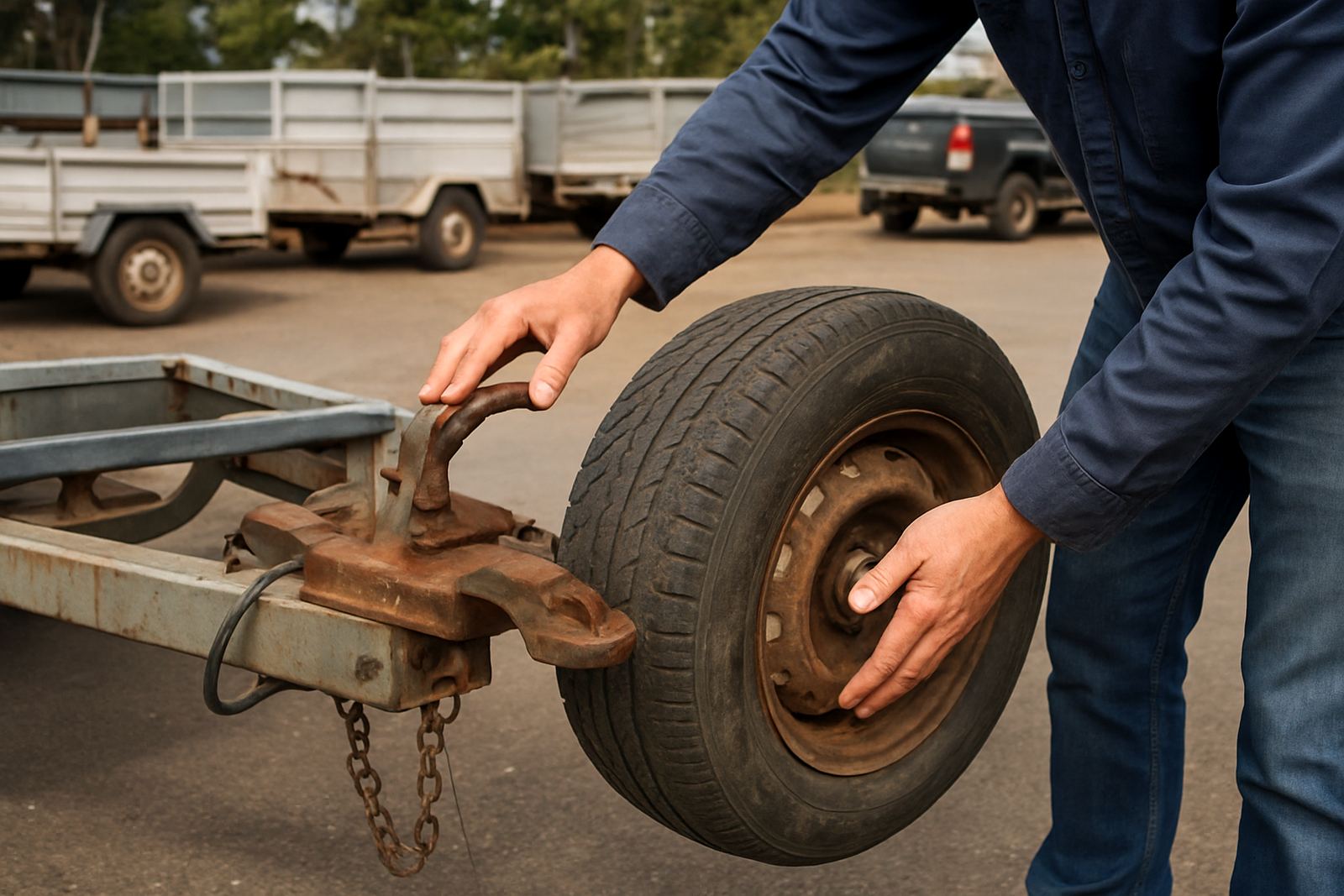
Rust is one of the biggest traps when buying a used trailer. Surface rust can be manageable, but deep corrosion on the drawbar, floor, wheel arches or welds is another matter. A trailer may look acceptable at a glance, yet still have tired joints, bent members or a patchwork of repairs hidden under a fresh coat of paint. That is where a proper inspection earns its keep.
Open every latch, check the floor from underneath and look for uneven wear on the wheels. Inspect the coupler, safety chains, spare wheel bracket and jack if fitted. If the trailer has had accident damage, you may see twisted gates, poor welding or doors that do not shut square. One buyer in Johannesburg almost paid for a bargain box trailer, only to find the floor had rotted through near the rear end where water had sat for months.
- Check the drawbar, floor and welds for corrosion
- Watch for fresh paint hiding old damage
- Test gates, hinges and catches for proper fit
Tyres, Bearings and Lights Matter More Than Most Buyers Think
Many buyers focus on the body and forget the running gear. That is a mistake because tyres, bearings and lights affect safety the moment you hitch up. Tyres may still have tread, but if they are cracked, aged or mismatched, they can fail under load. Bearings that feel rough or noisy can overheat on the freeway between Pretoria and Bloemfontein, and a failed light set can turn a simple trip into a roadside headache.
Look closely at the tyre date codes, sidewall cracks and evenness of wear. Spin the wheels if possible and listen for grinding or wobble. Make sure all lights work, including brake lights and indicators, and check the plug for corrosion. On many used trailers, wiring faults come from poor joins and weather damage, not from one big failure. A proper check saves time and money later, and it is worth being a little fussy here.
- Replace cracked or aged tyres before heavy use
- Test wheel bearings for play, noise and heat
- Confirm that every light works before collection
Do Not Buy Without Checking Load Rating and Braking Needs
One of the most expensive mistakes is buying a trailer that is too small for the load. Every trailer has a mass rating, and it is there for a reason. Overloading damages tyres, axles, couplers and floors, and it can also create trouble at roadside checks. If you plan to move equipment, building materials or bulk goods, the rated capacity should be clearly understood before you pay.
Braked trailers are often the better choice for heavier loads, especially if you will tow on hills or for longer distances. In and around Durban, where traffic and gradients can be demanding, the right braking setup can make a big difference. For smaller domestic use, an unbraked trailer may be enough, but only if the job really suits it. The wrong setup is not a small compromise, it is a recurring risk.
Before agreeing to buy, ask yourself these questions:
- What is the heaviest load I will carry in normal use?
- Does the trailer have enough capacity with a safety margin?
- Will I tow in city traffic, on highways or over long distances?
Use a Pre-Sale Inspection and Save Yourself Trouble Later
Many buying mistakes happen because the trailer is judged on appearance alone. A pre-sale inspection gives you a clearer picture of condition, value and any work likely to come up soon. That helps with price guidance too, since a trailer needing bearings, wiring or floor repairs should not be priced the same as a clean one with fewer issues. It also reduces awkward surprises when the seller says it is ready to go but the details say otherwise.
Working with used bakkies and trailers across Kempton Park, Johannesburg, Pretoria, Polokwane, Bloemfontein and Durban means we keep seeing the same mistakes. Buyers rush the process, skip inspection and then end up paying twice. A proper condition report, clear photos and viewing arrangements can help you compare options before you travel. If you are buying for a business, that matters even more because downtime costs money and can throw off deliveries.
When in doubt, slow the process down. The right trailer should fit your work, your towing vehicle and your budget, with no nasty surprises after collection.
A Local Example: The Cheap Trailer That Cost More in the End
A buyer from Centurion once found a low-priced trailer advertised as ready for immediate use. The body looked tidy, the seller sounded helpful and the price was below similar units in the area. On inspection, the tyres were dated, the floor showed early rot underneath and the lights worked only after a tap on the plug. The deal was still possible, but only after several repairs and a second round of transport arrangements.
That is the real lesson. A trailer is not a bargain just because it is inexpensive on the day. You need to factor in tyres, bearings, paperwork, towing safety and the work it will do for you over time. If the numbers do not add up, walk away and keep looking. There is always another trailer, but not every trailer is worth the trouble.