Built for secure bike transport on South African roads
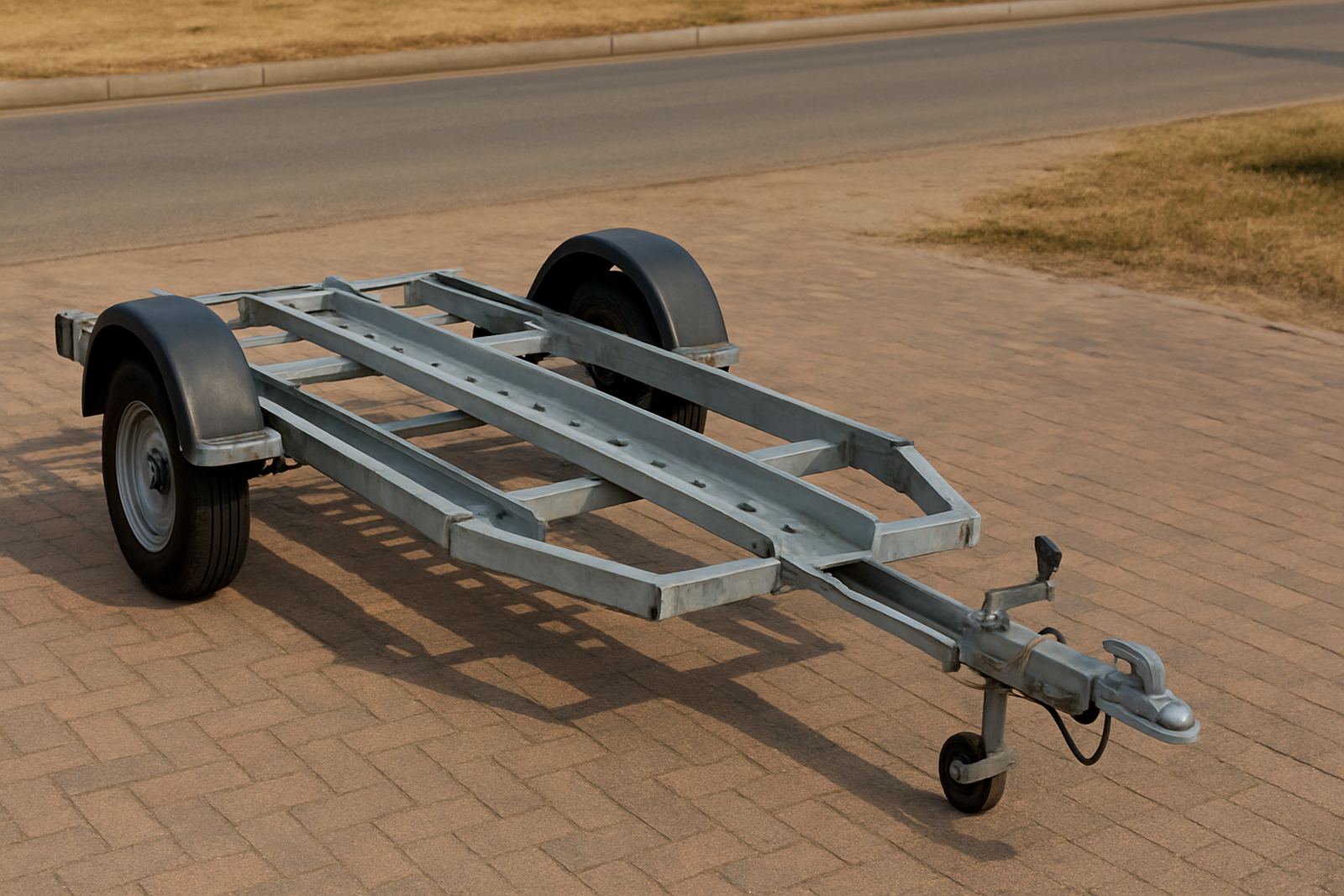
A motorcycle trailer is a purpose-made load carrier for transporting one or more motorcycles behind a bakkie or tow vehicle. The key features are a low loading height, a ramp for easy roll-on loading, and a tie-down layout that keeps the bike upright and controlled on rough tar, gravel roads and stop-start traffic. Used units vary in finish, but the right one should still feel solid at the drawbar, with straight chassis members, working lights and a deck that sits level when coupled.
For private owners, race riders, bike dealers and repair workshops, these trailers save time and reduce the risk of damage during transport. They also help when a bike is non-riding after repairs, a service, or an accident. In Gauteng, KwaZulu-Natal and the Free State, buyers often want trailers that can handle frequent loading, power-cut-related workshop moves, and long-distance trips between Pretoria, Johannesburg, Bloemfontein and Durban.
Typical used motorcycle trailers are simple to maintain and do not need power or gas to operate. You only need a suitable towing vehicle, a correct tow hitch, a working electrical plug for lights, and basic load securing gear. For buyers looking for a sensible, no-fuss towing option, this category is often one of the most cost-effective ways to move bikes safely.
Sizes and layouts that match the job
Motorcycle trailers come in a few practical layouts, from single-bike trailers to multi-bike units for clubs and dealers. The right size depends on how many bikes you move, the wheelbase of the motorcycle, and whether you need space for helmets, tools or spares. A compact trailer is easier to park in Kempton Park driveways and tight workshop yards, while a longer deck gives more room for larger touring bikes or two smaller machines side by side.
- Single-bike trailers: best for private use, compact storage and lighter towing requirements.
- Dual-bike trailers: suited to dealers, families with multiple bikes, or regular track day transport.
- Open flatbed style: simpler access, easier inspection and less weight to tow.
- Enclosed or semi-enclosed options: better protection from road grime and coastal humidity, but heavier and often dearer.
- Removable ramp setups: useful where the trailer must also serve light general haulage duties.
Common deck lengths range from about 2,000 mm to 3,600 mm, with widths from 1,200 mm to 2,000 mm depending on the number of bikes and the track spacing. Buyers should also check the trailer mass and the gross vehicle mass rating, because the tow vehicle must remain legal once the bike, trailer and any accessories are loaded. A larger trailer is not always better if you only need to move one motorcycle now and then.
Where motorcycle trailers suit buyers and businesses
These trailers suit a wide range of users in South Africa. Private sellers use them to move a bike between home, workshop and buyer. Dealers use them for collection and delivery arrangements, especially when a motorcycle is sold before it is licensed, cleaned or fully sorted. Repair shops and panel shops also use them to collect damaged bikes, because the low deck makes loading much easier than a high-sided trailer.
They are also useful for events. If you are travelling from Johannesburg to Durban for a show, or moving stock between Centurion and Polokwane, a properly secured motorcycle trailer keeps the machine stable over long distances. In coastal areas like Durban, buyers should look for signs of corrosion on the frame, fasteners and lighting mounts, while inland buyers should still check for wear from overloading, poor repairs and bent tie-down brackets.
For businesses, a good trailer can support faster turnarounds. It means fewer delays during inspections, photo packages, customer viewings and collection coordination. It also helps when a buyer wants delivery arranged after a sale, especially if the motorcycle is not roadworthy yet.
What to look for before you place an order
When ordering a used motorcycle trailer, do not stop at the photos. Ask for a proper condition report, and check that the ramp, wheels, jockey wheel and all securing points are included if you need them. A trailer can look tidy from the side and still have worn bearings, cracked welds or a bent loading ramp. If you are buying remotely, it is worth confirming the chassis number, the lights, the coupler and the condition of the tyres before arranging collection.
- Check that the frame is straight, with no visible twist or fresh weld repairs that do not line up.
- Confirm the load deck size and whether your bike’s handlebars and mirrors will clear the side rails.
- Ask how many tie-down points are fitted and where they are mounted.
- Inspect tyres for age cracks, flat spots and uneven wear.
- Make sure the electrical plug and lights work for indicators, brake lights and tail lights.
- Confirm that the ramp is long enough for a low bike, so the approach angle is safe.
If the trailer will cross municipal areas or go through licensing changes, ask for the correct paperwork as well. A clean paper trail matters when you want quick registration, easier insurance, and fewer delays at roadworthy or licensing checks.
Care, servicing and long-term use
Motorcycle trailers need regular care, but the upkeep is straightforward. Grease wheel bearings at the right intervals, keep the tyres at the correct pressure, and inspect the lighting before every longer trip. Check the ramp hinge, latches and safety chains for wear, especially if the trailer is used in wet weather or on rough roads. If the trailer is kept outside in Kempton Park or Durban, a simple cover or sheltered parking spot helps reduce rust and sun damage.
For best results, wash mud and road grime off after trips, particularly if the trailer has been used near the coast or on dusty routes. Light surface rust should be treated early before it spreads into the deck or frame. If the trailer sits unused for weeks, move it occasionally so the tyres do not develop flat spots. This is a small thing, but it makes a difference when the trailer has to go out quickly for a buyer or collection.
There is no gas requirement for this product, and no power supply is needed for towing itself. Power is only relevant for the trailer lights, which draw from the tow vehicle. A sound electrical connection and a properly fitted plug are enough for normal use.
How Buy Those helps with trailer buying and delivery
Buy Those assists buyers and sellers with used trailer listings, inspections, buyer matching and delivery arrangements across Kempton Park, Johannesburg, Pretoria, Polokwane, Bloemfontein and Durban. Our team can help confirm the condition of a motorcycle trailer before purchase, arrange viewing times, and support collection where the trailer is being sold by a private owner or dealer. That helps when a buyer needs facts quickly, not guesswork.
With motorcycle trailers, small details matter. A trailer with the right ramp angle, proper tie-down layout and working lights can save time every week. A poorly matched unit can be awkward to load, hard to park and expensive to put right. We help buyers compare options by size, condition and use case so they can choose the one that fits the job and the budget.
Whether you need a single-bike unit for personal use or a dual-bike trailer for regular business work, the aim is the same: safe transport, sensible running costs and a trailer that holds up to local conditions. If you are checking options now, use the enquiry form on our contact page and we will take it from there.
Key facts
| Typical use | Single-bike or multi-bike transport for private owners, dealers and workshops |
|---|---|
| Common sizes | About 2,000 mm to 3,600 mm deck length, depending on layout |
| Load points | Fixed or adjustable tie-down eyes, usually 4 to 8 points |
| Loading equipment | Rear ramp, sometimes removable, with low approach angle |
| Tow requirement | Suitable tow vehicle, legal hitch, working lights and licence compliance |
| Maintenance | Tyres, bearings, lights, ramp hinges, chassis and rust checks |