What a livestock trailer is built to do
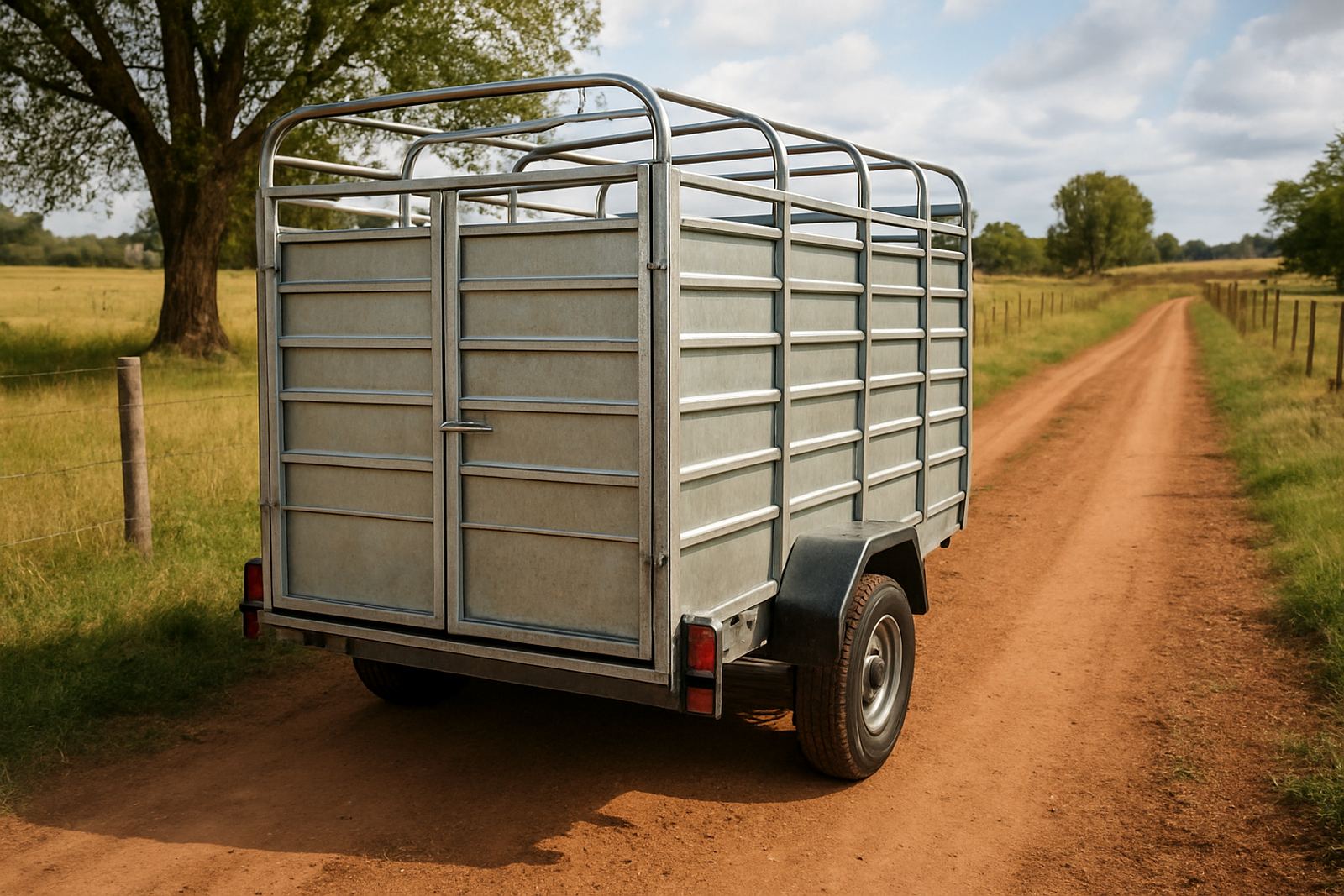
A livestock trailer is a enclosed or semi-enclosed towable unit made for carrying animals between farms, auctions, feed lots and holding pens. The layout is usually simple: a strong chassis, slip-resistant floor, side walls, ventilation openings, rear loading door or ramp, and tie points where needed. On used units, the main value is in the frame condition, floor strength and how well the doors, hinges and latches still work.
These trailers suit stock movement in areas like Kempton Park, Pretoria, Johannesburg, Polokwane, Bloemfontein and Durban, where buyers often need something that can handle rough yard surfaces and frequent use. A good trailer should tow straight, sit level on the vehicle, and keep animals contained without sharp edges or loose panels.
Common sizes and layout options
Used livestock trailers come in a range of lengths and widths, so the right option depends on the type of animals and how often you move them. Smaller units may suit a smallholding or mixed farming setup, while larger trailers are better for regular commercial transport. Most buyers look at internal length, loading height and axle rating first, then choose a body style that matches their stock.
- Single-axle trailers for lighter loads and easier turning in tight farm yards
- Tandem-axle trailers for better weight spread and more stable towing on longer trips
- Single compartment models for one group of animals
- Split-compartment layouts for separating sheep, goats or mixed stock
- Ramp or swing-door rear access, depending on loading preference
Typical lengths range from about 2.4 metres to 5.0 metres, with widths often between 1.5 metres and 2.1 metres. Payload capacity varies a lot by frame and axle condition, so the advertised size should always be checked against actual roadworthy and loading limits.
Where these trailers suit best
Livestock trailers are practical for private farmers, breeders, traders and dealers who need to move animals between properties, sales and veterinary visits. They are also useful for rural contractors who assist with stock relocation during drought periods, veld management or seasonal sale runs. In coastal areas such as Durban and the surrounding routes, buyers should pay close attention to corrosion, especially on floor edges, hinges and the undercarriage.
For inland use around Gauteng, the main concerns are dust, braking performance and how much wear the trailer has taken from frequent road travel. If a trailer has been stored outside, check for sun damage to rubber seals, rust around welds and any swelling in timber flooring. A trailer that looks tidy from the outside can still need expensive work underneath.
Towing setup, lighting and operating needs
Livestock trailers do not need fixed installation, gas or mains power. They do however need the towing vehicle and coupler to match properly, and the lights and brakes must function as they should before any trip. Buyers should confirm the towball size, safety chain points, electrical plug type and whether the trailer has electric brakes, mechanical brakes or no braking system at all. That detail affects both road use and how much weight you can safely move.
Before collection or delivery, make sure the trailer can be hitched without forcing the coupling or modifying the drawbar. If the lights are dim, the wiring is brittle or the earth is poor, it is worth sorting that out early. Power cuts do not affect the trailer itself, but if you are using electric loading gear at the yard, you need a practical backup plan for stock handling and gate access.
- Check tow vehicle rating and licence requirements before buying
- Confirm brake type and service condition
- Test tail lights, indicators and number plate light
- Look for a secure hitch, safety chains and working jockey wheel
Care, servicing and what wears out first
Used livestock trailers need regular attention if you want them to last through hard farm use. Wash out manure, mud and feed residue after each trip, then let the floor dry fully so rust does not start underneath. Hinges, latches and ramps should be lubricated, and tyres must be checked for sidewall cracks, uneven wear and old date codes. On timber floors, look for soft patches, lifted boards and signs of rot near the wheel wells.
Springs, shackles, hub bearings and brake components are common service items on older trailers. If the unit has been standing for a while, ask whether the bearings were repacked and whether the wheels spin freely. A little surface rust is normal on a used trailer, but deep pitting on the chassis or cracked welds can turn into a major repair. Keep the paperwork in order too, especially if the trailer will cross municipal or provincial routes often.
Checks to make before you reserve a bakkie or trailer
When you are comparing stock, photos alone are not enough. Ask for the exact dimensions, axle type, tare weight if available, and a clear note on whether the trailer is ready to tow or needs work. It helps to know the previous use as well, because a trailer used for calm yard transfers will often wear differently from one used on corrugated roads and long haul routes.
- Frame condition and any signs of bending or welding repairs
- Floor type: timber, steel or mixed construction
- Ventilation gaps and condition of side panels
- Door, ramp and latch operation
- Tyres, spare wheel and hub play
- Roadworthy status and number plate paperwork
If you are buying for a farm near Centurion, East Rand or further out in Bloemfontein or Polokwane, think about road distance, service access and where the trailer will be stored at night. Our team can help compare listings, arrange viewings and set up collection or delivery. That way you get a trailer that fits the job, not just the budget.
Key facts
| Product type | Used livestock trailer |
|---|---|
| Common lengths | Approx. 2.4 m to 5.0 m internal length |
| Common widths | Approx. 1.5 m to 2.1 m internal width |
| Axle options | Single axle or tandem axle |
| Loading access | Rear ramp or rear door, depending on unit |
| Power / gas needs | None required; towing vehicle connection only |