Why the underbody matters on a used bakkie or trailer
A shiny bonnet can hide plenty, but underneath is where the real story sits. The underbody shows whether a vehicle has been overloaded, driven on gravel roads, caught in flood water or repaired after a knock. For buyers in places like Kempton Park, Johannesburg and Pretoria, that matters because a work vehicle often spends its days on site, in traffic and loading goods in all weather.
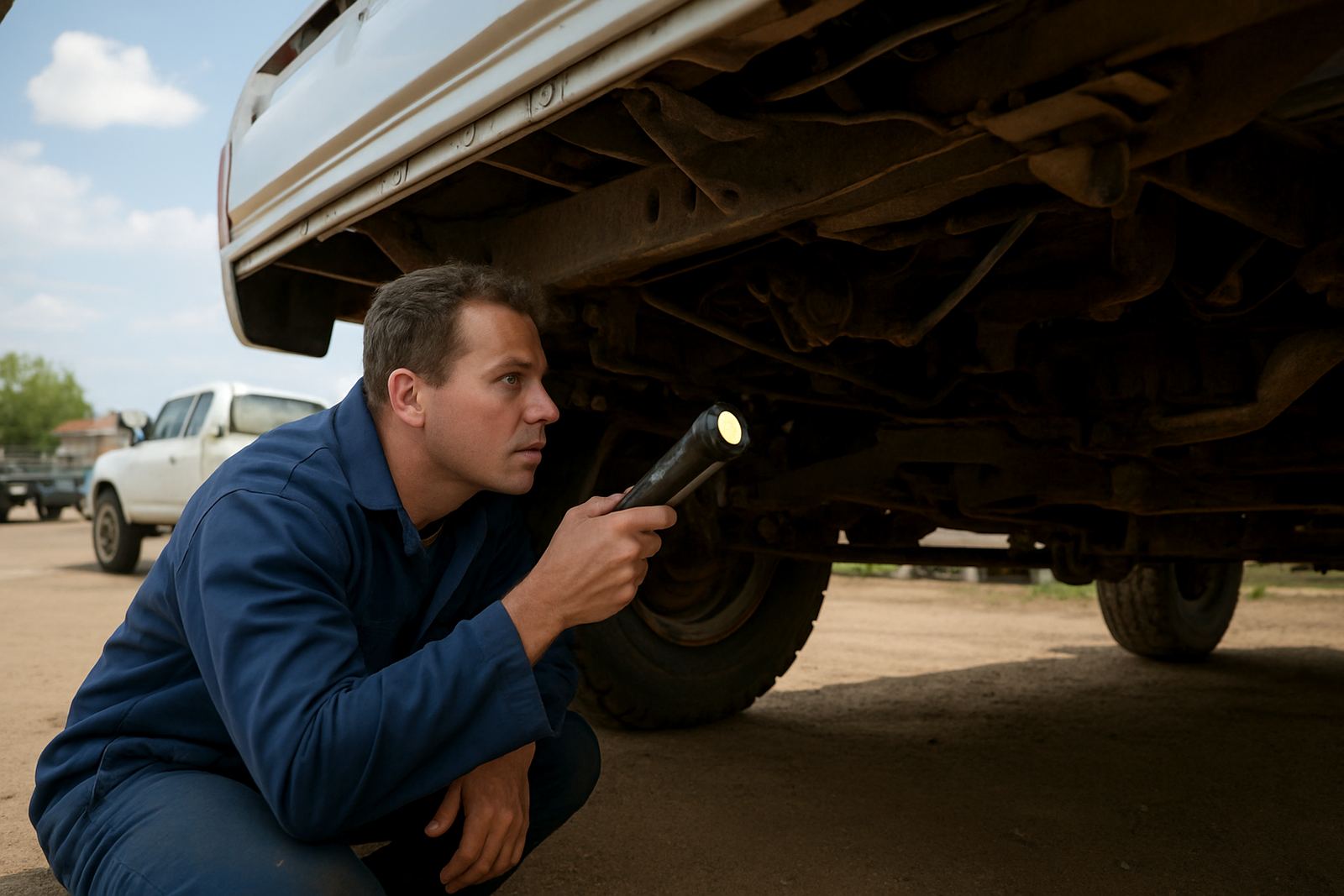
On a bakkie, you want to check the chassis rails, suspension mounts, brake lines, fuel lines, steering components and the condition of the load bed supports. On a trailer, look at the drawbar, axle mounts, floor supports, leaf springs, coupling and wiring runs. A quick glance can save you from a purchase that looks fine on top but starts asking for money within weeks.
If you are buying for business use, the underbody also affects downtime. A vehicle with rusted brackets or damaged mounting points can fail an inspection or keep getting sent back to the workshop. That costs more than the repair itself, especially when deliveries are already tight and power cuts are slowing everyone down.
What to look for first when you crawl underneath
Start with the parts that carry weight and keep the vehicle straight. You are not looking for showroom condition, but you are looking for signs of neglect or serious damage. In South African conditions, surface rust is common, but heavy scaling, fresh underseal hiding repairs, or oil soaked dirt around joints should make you pause.
- Chassis rails that are straight, without kinks or crush marks
- Suspension leaves, bushes and shock mounts with no obvious cracking
- Brake pipes and flexi hoses with no wet patches or rubbing damage
- Fuel lines and wiring clipped neatly, not hanging loose
- Crossmembers and floor supports on trailers with no sagging
- Couplings, hitches and safety chains that are properly seated
Look for uneven wear on tyres as well. If one side is scrubbing more than the other, the underbody may have a bent axle, worn suspension or previous impact damage. A seller may say it is only a set of tyres, but often the tyres are just showing you the deeper problem.
Rust, repairs and the coastal factor
Rust is one of the biggest underbody issues on used work vehicles, especially if they have spent time near the coast. Durban and other humid areas can be tough on steel, and a trailer that lived outside near salt air can age faster than its mileage suggests. A bakkie used inland may still rust badly if it was driven through standing water or parked on wet ground for long periods.
Look carefully at welds, patch plates and any areas where underseal has been brushed over fresh metal. Clean, even repairs can be fine, but lumpy welds, mismatched plates and thick black coating in only one section can mean someone was hiding damage. Check around spring hangers, tow bars, spare wheel mounts and the back edge of the load box where dirt collects.
It helps to remember that rust is not always the same thing. Light surface rust on a bolt is one thing. Deep corrosion on a chassis rail or trailer floor support is another. If the metal is flaky or you can poke through it with a screwdriver, you are looking at a serious repair, not a quick touch-up.
Signs of towing abuse on trailers and bakkies
Trailers and bakkies used for towing often show specific underbody wear. A hard-used towing setup can still be sound, but only if the correct parts were fitted and maintained. The problem is that many sellers focus on the body and ignore the bottom side where all the stress goes.
On trailers, watch for twisted drawbars, worn coupling pins, bent light brackets and axles that sit slightly off centre. On bakkies, check the tow bar mounting points, rear crossmember and rear suspension for deformation. If the back end sits lower than it should or the vehicle squats under a moderate load, that can point to tired springs or excessive use.
- Cracks near the tow bar mount or trailer drawbar joints
- Fresh paint over old repairs around stress points
- Worn kingpins, bushes or shackle pins that let parts move too much
- Electrical cables dragged under the chassis and damaged by road debris
- Grease or oil thrown onto the underside from leaking components
One Polokwane buyer recently looked at a small trailer that seemed tidy from the side. Underneath, the floor braces were rusted through close to the axle mounts, and the coupler had been welded twice. It would still pull, but not safely, and the repair bill was not small. The buyer walked away, which was the right call.
How to inspect properly before you pay
Do not rely on a quick look in a dark yard. Ask for proper light, and if possible inspect on level ground with room to move around safely. A torch, gloves and a small mirror help a lot. If the seller is rushing you or will only show the vehicle on uneven gravel, that is already information.
Check whether oil, coolant or hydraulic fluid is dripping. A dry underbody is not a guarantee of perfection, but active leaks are a warning sign. On bakkies, inspect the sump area, gearbox casing, propshaft and rear differential for wet spots. On trailers, look at wheel hubs for heat discolouration and grease leakage, because hot hubs can mean bearing trouble.
It is also worth tapping the metal lightly in suspicious areas. Solid metal gives a different sound from thin, corroded steel. This is not a full mechanical test, but it can help you spot problem areas quickly. If anything feels off, insist on a proper inspection before you commit.
What the inspection should mean for price and next steps
An underbody issue does not always kill a deal, but it should change the price and your plans. Minor surface rust, aged bushes and a worn coupling can be expected on older work vehicles. Serious chassis damage, poor welds or brake line corrosion should push the price down sharply or take the vehicle off the list altogether.
For fleet buyers and private sellers alike, clear condition reporting saves time. If the underbody needs attention, write it down properly so both sides know what they are agreeing to. That avoids arguments later about what was visible and what was not. It also helps when arranging collection, delivery or a viewing in areas like Centurion, the East Rand or across Gauteng and beyond.
At Buy Those, underbody checks form part of practical buying support for used bakkies and trailers across South Africa. A careful look underneath gives buyers a better idea of running costs, safety and whether a vehicle is fit for the work ahead, not just the drive home.