Start with the load you move every week
Before you look at trailer measurements, write down your regular cargo profile. A landscaper moving mowers, tools and green waste needs a very different setup from a family that tows camping gear once a month or a dealer shifting stock between yards. If the trailer is too small, you end up loading too high, tying down awkward shapes and making extra trips. Too large, and you carry dead space, more weight and a trailer that is harder to park, reverse and store.
Measure the biggest items you move, then add space for strapping points and access. A trailer should fit your actual load with a bit of room, not just squeeze it in. That little bit of planning makes a big difference when you are loading after hours, in rain, or during power cuts when the yard is dark and everyone wants to get home.
- List the longest item, widest item and heaviest item.
- Check how often you move loose cargo versus boxed cargo.
- Decide whether you need a flat deck, enclosed box or open trailer.
- Allow space for tie-downs, wheel arches and tailgate movement.
Match trailer length to the cargo shape
Length is often the first measurement buyers get wrong. A trailer that is too short forces long items to sit at an angle, which can upset balance and make loading unsafe. A trailer that is too long may be harder to store at a home in Kempton Park, on a tight industrial stand in Spartan, or in a yard where delivery vehicles already compete for space.
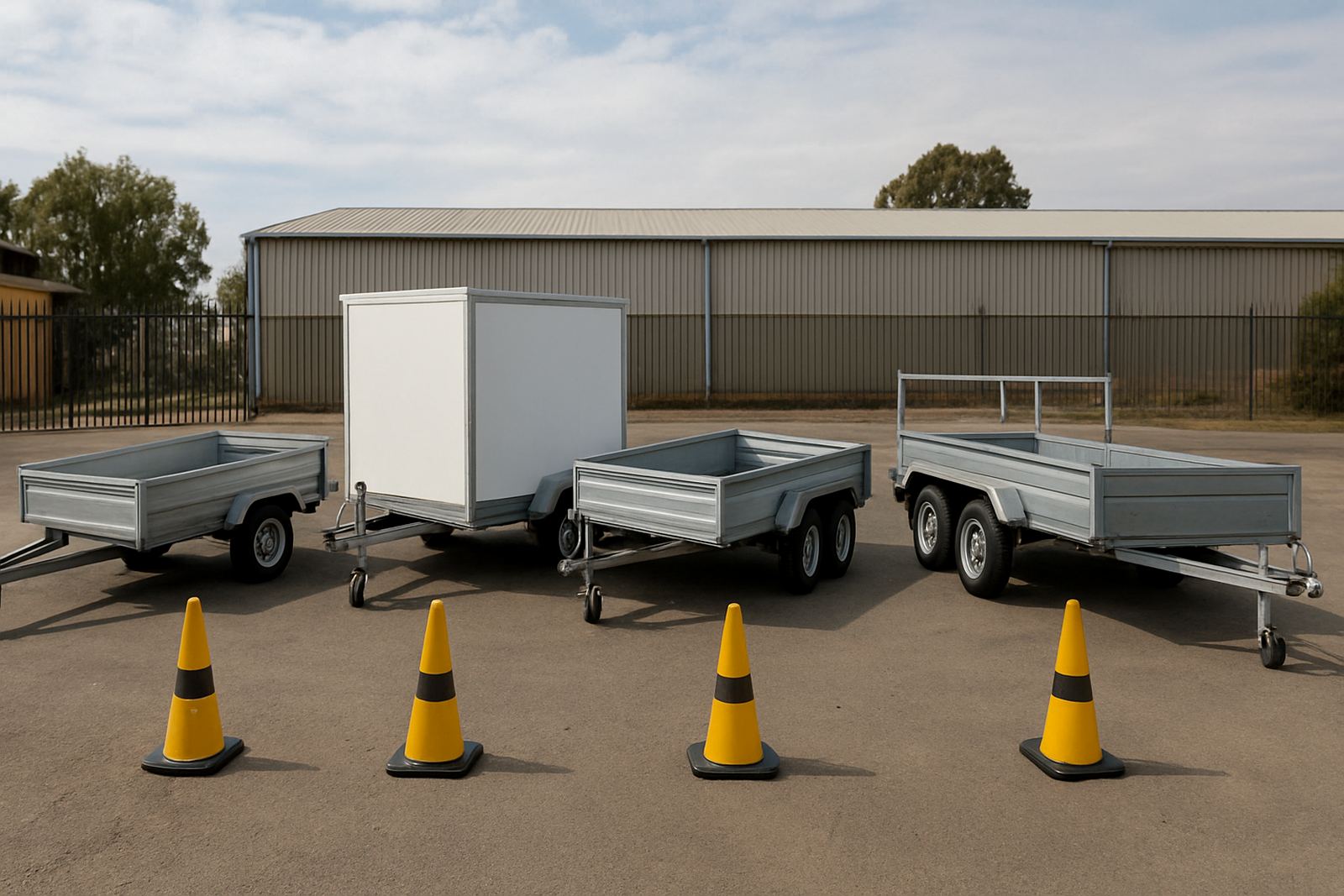
For general use, many buyers look at shorter trailers for garden refuse, smaller tool loads and domestic moving. Longer trailers suit building materials, furniture, stock movement and mixed business use. If you carry ladders, pipes or timber, check the full length from front support to rear gate, not just the body shell. A metre saved in the yard can cost you two trips a week.
- Short loads often suit compact trailers with easy manoeuvring.
- Long loads need a straight bed and proper front support.
- Check gate height if you load trolleys or wheeled equipment.
- Think about turning space at home, work and storage sites.
Width matters more than many buyers think
Width affects how cargo sits and how the trailer tracks behind the tow vehicle. If the deck is too narrow, you may not fit two crates side by side or a machine with a wide wheelbase. If it is too wide, you can run into access problems at gates, rural driveways and some municipal parking areas. Wider trailers can also be less convenient in traffic and harder to reverse in tight commercial yards.
Always check internal width, not only the outside measurement. Wheel arches take space, and side rails can reduce usable width more than expected. For cargo that shifts, such as boxed stock, building offcuts or loose tools, a slightly wider trailer often helps with balance and tie-down points. For narrow access routes in places like Centurion or parts of the East Rand, a slimmer setup can save a lot of hassle.
- Measure the widest item at its widest point, including handles or guards.
- Allow space for straps, nets and side rail clearance.
- Check whether the trailer can pass through your gate and driveway.
- Remember that wider trailers are not always easier to park.
Know the weight limit before you decide on size
Trailer size and load capacity do not always move together. A large trailer can still have a modest carrying limit, depending on its build and axle setup. You need to think about gross weight, not just dimensions. That includes the trailer itself, the cargo and anything added after loading. Overloading is hard on tyres, couplings, brakes and suspension, and it can lead to fines or refusal at a roadblock.
If your cargo is dense, such as bricks, soil, machinery parts or water tanks, weight may become the main issue long before you run out of space. For lighter but bulky loads like boxes, bedding or packaging material, size may matter more than mass. Buyers often get caught out when a big looking trailer only works well for light goods, so check the spec carefully before committing.
- Ask what the trailer weighs empty.
- Work out the usual load weight, not the once-off maximum.
- Check that your tow vehicle can handle the combined mass.
- Keep a margin for rain soaked cargo, tools or extra fuel cans.
Choose a setup that fits your towing vehicle
Your bakkie or SUV must be able to tow the trailer safely and legally. It is not only about power, but also about braking, towbar rating and how the vehicle behaves when loaded. A small trailer behind a light vehicle may tow nicely empty and become unsettled once loaded. A heavier trailer behind a stronger vehicle may still be a poor match if the load sits too high or too far back.
Check the towbar rating, ball height and electrical fitment for lights before buying. If you tow often through Johannesburg traffic, Pretoria suburban roads or the N3 corridor, you want a trailer that tracks well and does not push the rear of the vehicle around. A good match makes fuel use easier to predict and reduces wear on clutch, brakes and tyres.
- Confirm your vehicle’s tow rating in the handbook.
- Match the trailer nose weight to stable towing.
- Check that lights, indicators and number plate mounting are correct.
- Make sure the load does not block rear visibility more than necessary.
Think about loading, viewing and daily handling
The right trailer size also depends on how you use it day to day. If you load by hand, a lower deck can save time and back strain. If you use pallets or trolleys, you may need a wider opening and a stronger ramp. If the trailer will be parked outside in coastal humidity, as some Durban buyers know well, materials and finishes matter because rust can creep in faster than expected.
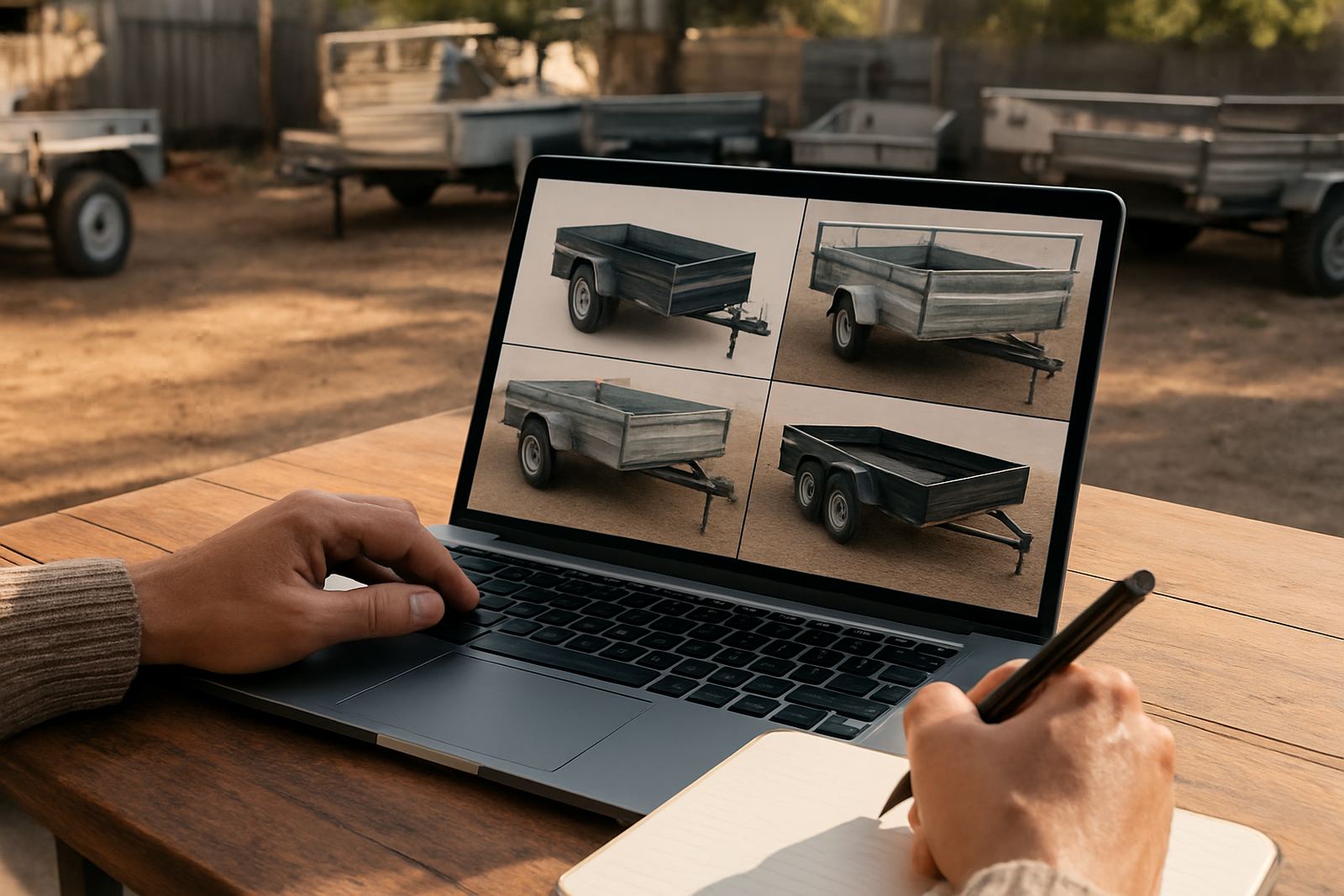
Also think about where you will inspect or collect the trailer. In business yards across Spartan, Polokwane or Bloemfontein, space can be tight and access may be shared with other vehicles. A trailer that is easy to hitch, turn and park will get used more often. That matters more than a few centimetres on a spec sheet. Practical use beats theory every time.
- Check ramp angle if you load wheeled equipment.
- Look at tailgate height for repeated hand loading.
- Consider storage space at home or at the business premises.
- Choose materials that suit your weather and storage conditions.
A local example makes the choice clearer
Take a small contractor in Kempton Park who moves cement bags, hand tools, shuttering and a compact mixer between sites in Pretoria and the East Rand. A very short trailer may force awkward stacking and extra trips. A very large one may be difficult to keep in the yard and unnecessary for everyday work. In that case, a medium sized trailer with enough deck length for standard materials and a sensible payload would be the better buy.
The same thinking works for a private seller moving household goods. A family in Centurion might only need a trailer for occasional furniture, luggage and garden waste, while a dealer in Johannesburg may need something that suits repeated loading, quick viewing arrangements and delivery coordination. The best size is the one that fits the cargo most often, not the one that looks biggest on the day. That simple rule saves money and headaches.
If you are comparing used trailers, match the measurements to your own routine, not to someone else’s ad. Once the dimensions, weight and tow vehicle line up, the trailer starts earning its keep from the first trip.