The brief from a busy Kempton Park building crew
The client was a small building contractor based in Kempton Park, working on residential alterations and light commercial fit-outs around the East Rand. The main need was simple: a used dropside bakkie that could carry sand, cement, timber, tools, and a few workers when needed, without becoming a money pit.
The team wanted something reliable enough for early starts, stop-start town driving, and site access where roads are often rough or uneven. They also needed a vehicle that could be kept running through power-cut-related delays and wet weather, with enough clearance for mixed site conditions and not too much electronic fuss.
- Use case: site materials, tools, and crew support
- Budget: mid-range used vehicle, not a project truck
- Area: Kempton Park, with trips across Gauteng
- Priority: mechanical health over cosmetics
What we looked for and the constraints we worked around
We started by narrowing the search to used dropside bakkies with a sensible load bed size, decent payload ability, and service history that made sense for construction work. The client wanted a unit that could cope with regular loading, but still be manageable for smaller deliveries into suburbs, estates, and tighter site entrances.
The big constraints were time and cash flow. The builder did not want weeks of back-and-forth, and they needed to keep enough capital aside for materials, labour, and municipal compliance costs. So we prioritised vehicles that had straightforward maintenance needs, easy parts availability, and clean paperwork.
- Preferred cab and load bed layout for easy loading
- Checked for signs of hard work, overloading, and poor repair work
- Reviewed licence and ownership documents before moving forward
- Focused on units suited to Gauteng traffic and stop-start use
Inspection and condition reporting before the deal
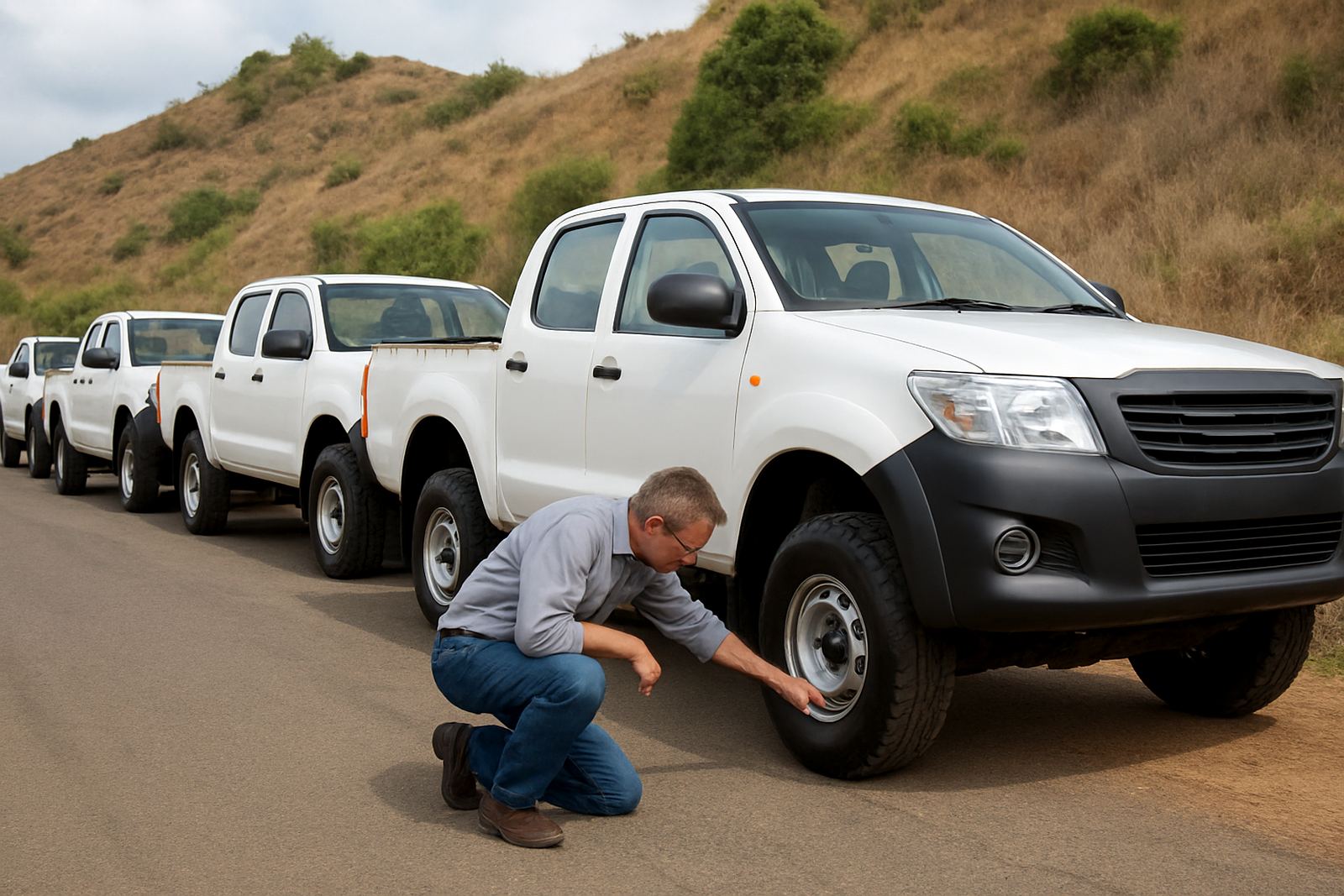
Our vehicle inspector carried out a full pre-sale check and documented the condition in plain language. That included bodywork, chassis, suspension, brakes, tyres, steering, fluids, and general wear on the dropside load area. For a working vehicle, the small things matter, like whether the tailgate sits properly and whether the bed has been repaired after a heavy load or two.
The inspection also covered cold start behaviour, idle quality, gearbox feel, and any warning lights that could become a problem after purchase. Because this was for a builder, we paid extra attention to anything that could cause downtime on site or during deliveries. The report gave the client a clear view of what was good, what needed attention, and what could be budgeted for later.
- Checked tyres for uneven wear and legal tread
- Looked at suspension and leaf spring condition under load marks
- Reviewed brakes for stopping confidence in city traffic
- Noted cab wear, load bed damage, and signs of repainting
The matching process and pricing guidance
Once we had the inspection results, we matched the client with a used dropside bakkie that fit the brief and the budget. The asking price was assessed against the condition, mileage range, and work-ready spec, then we guided the buyer on where there was room to negotiate and where the price was already fair.
For a small contractor, the point is not just to buy cheap, but to buy right. A bakkie that saves a few Rand upfront but spends half the month at a workshop will cost far more over time. We helped the client weigh the asking price against expected upkeep, fuel use, and the practical cost of downtime, which made the decision a lot easier.
Collection, delivery, and handover across the East Rand
After the deal was agreed, we coordinated collection and delivery from Spartan, Kempton Park. The handover was planned around the client’s work schedule so there was no lost site time. Morne handled the logistics side, making sure the vehicle moved safely and on schedule.
Because the client was operating across Kempton Park and nearby areas, we kept the route simple and practical. No drama, no wasted waiting around. The bakkie was delivered ready for immediate use, with the paperwork sequence explained clearly so the owner could get on with work and licensing steps without chasing missing documents.
- Collection coordinated to avoid peak traffic delays
- Delivery arranged to the client’s yard in Kempton Park
- Handover timing matched the builder’s working week
- Paperwork explained in a clear step-by-step way
Results for the builder and what changed on site
The builder ended up with a practical used dropside bakkie that immediately improved how materials moved between suppliers, storage, and sites. Crew transport also became easier for short runs, which helped when workers needed to get to a job early or move between two nearby addresses in one day.
Most importantly, the vehicle gave the client a more controlled way to manage site logistics without depending on ad hoc hires. That meant fewer delays, less waiting on other people, and better control over small jobs where timing matters. The bakkie has enough load space for daily work, but it is still easy to park and manoeuvre in Kempton Park streets and build zones.
Points that matter on a similar Kempton Park build sale
For any builder buying a used bakkie, we would follow the same process again: inspect first, price properly, then arrange delivery only once the vehicle has been checked and the paperwork is in order. That approach keeps surprises to a minimum and protects the buyer from expensive regret later.
We would also keep the brief narrow from the start. If the vehicle is mainly for site support, then comfort extras matter less than body condition, load bed strength, and maintenance history. That practical filter helped this Kempton Park builder get exactly what was needed, not a showpiece that looks good for a week and then sits in the yard.
- Start with the job the vehicle must do every day
- Inspect for working condition, not just appearance
- Keep the budget realistic for repairs and running costs
- Use a clear handover plan so work can continue without delay
Key facts
| Project type | Used dropside bakkie for building work |
|---|---|
| Client location | Kempton Park, East Rand |
| Vehicle use | Site materials, tools, and crew support |
| Timeline | 2 weeks from brief to delivery |
| Inspection | Pre-sale condition check with report |
| Delivery route | Spartan, Kempton Park to client yard |
| Key needs | Practical payload, easy loading, reliable daily use |